

How can luxury automotive create a compelling buying journey for all?
The luxury automotive industry is at a crossroads, needing to adapt to a new generation of customers without losing the heritage brand equity that its existing clientele have invested in. And in an industry that markets perfection, the execution of its buying journeys can’t be anything but extraordinary. Barry McPhillips, Head of International Creative at Mood Media, explains more
Prestige, heritage, and quality are just three of the many adjectives traditionally associated with the luxury automotive industry. The likes of Rolls-Royce, Bentley, Aston Martin, and Ferrari epitomise exclusivity and have historically attracted an eclectic customer base, ranging from collectors to performance enthusiasts. Owning a luxury vehicle comes with a perceived elevation in status that is considered more than worth the price tag.
Delivering perfection as standard
The luxury automotive sector is thriving and projected to be worth $655 million by 2027[1]. But it’s also highly competitive; a McKinsey survey found that 35% of luxury car buyers[2] would consider switching brands when making their next purchase. And that competition will only intensify as brands start to adapt to a changing audience and look to attract a new generation of buyers.
The new generation have a different perception of luxury brands and take different routes to purchase. However, the biggest players in luxury automotive also can’t afford to lose their legacy clientele. These dual priorities present a real challenge as brands need to retain their identity and heritage while being pressured to become all things to all people.
That’s why the buying experience is so important. Luxury automotive brands effectively sell the concept of perfection, which must be achieved in both the showroom and post-sales process to ensure long-term loyalty.
So, what qualifies as the perfect luxury automotive buying experience?
The power of personalisation
Firstly, it’s important to take a step back and look at the end-to-end buying journey. A luxury vehicle with a six-figure price point will almost always be a considered purchase, not an impulse buy, for all but the most extravagant billionaires. This may mean conversions take longer, but it also affords brands plentiful opportunities to engage potential customers through immersive experiences, strengthen connections through storytelling and community building, and take steps to ensure handover day is an event to remember.
Personalisation is now a priority for the industry. The luxury automotive sector is known for its exclusivity and rarity and inviting customers to create their dream car through customisations is the ultimate expression of both these traits. It also provides some of the highest margins, a bonus even for established brands like Ferrari, while simultaneously yielding vital data that can be used to further enhance the customer experience.
Encouraging customers to tailor a car to their exact specifications – crafting a true one-off – is the new benchmark for luxury automotive brands looking to cement their positions in an uncertain economic landscape.
Bringing the brand to life
If customers are to feel compelled to not only purchase a luxury car but also invest in customisations, they need to feel invested in the brand and everything it represents. The best way to communicate brand values is through content driven by storytelling.
The most powerful content is always rooted in the DNA of the brand, ensuring it remains recognisable to legacy customers, and showcases the exceptional craftsmanship that gives these vehicles their value. Automotive craftsmanship is an under-appreciated artform, representing hours of painstaking work and requiring skillsets that take decades to develop. Intentional content can take talented craftspeople away from the factory floor and into the spotlight. Interactivity can also be introduced to empower customers; AR glasses can enable customers to navigate to the content that interests them most, whether that’s diving into details of the engine, the paint, or the innovative driver assist technology.
That being said, it’s vital that luxury automotive brands don’t only focus their content on the car. Today’s customer is just as captivated by the aspirational work the car represents as they are by the vehicle itself. This is already reflected in advertising, where most luxury brands have already moved away from product-based marketing in favour of inspirational visuals that portray the lifestyle that the buyer hopes to unlock by buying a new car.
Curating a standout showroom
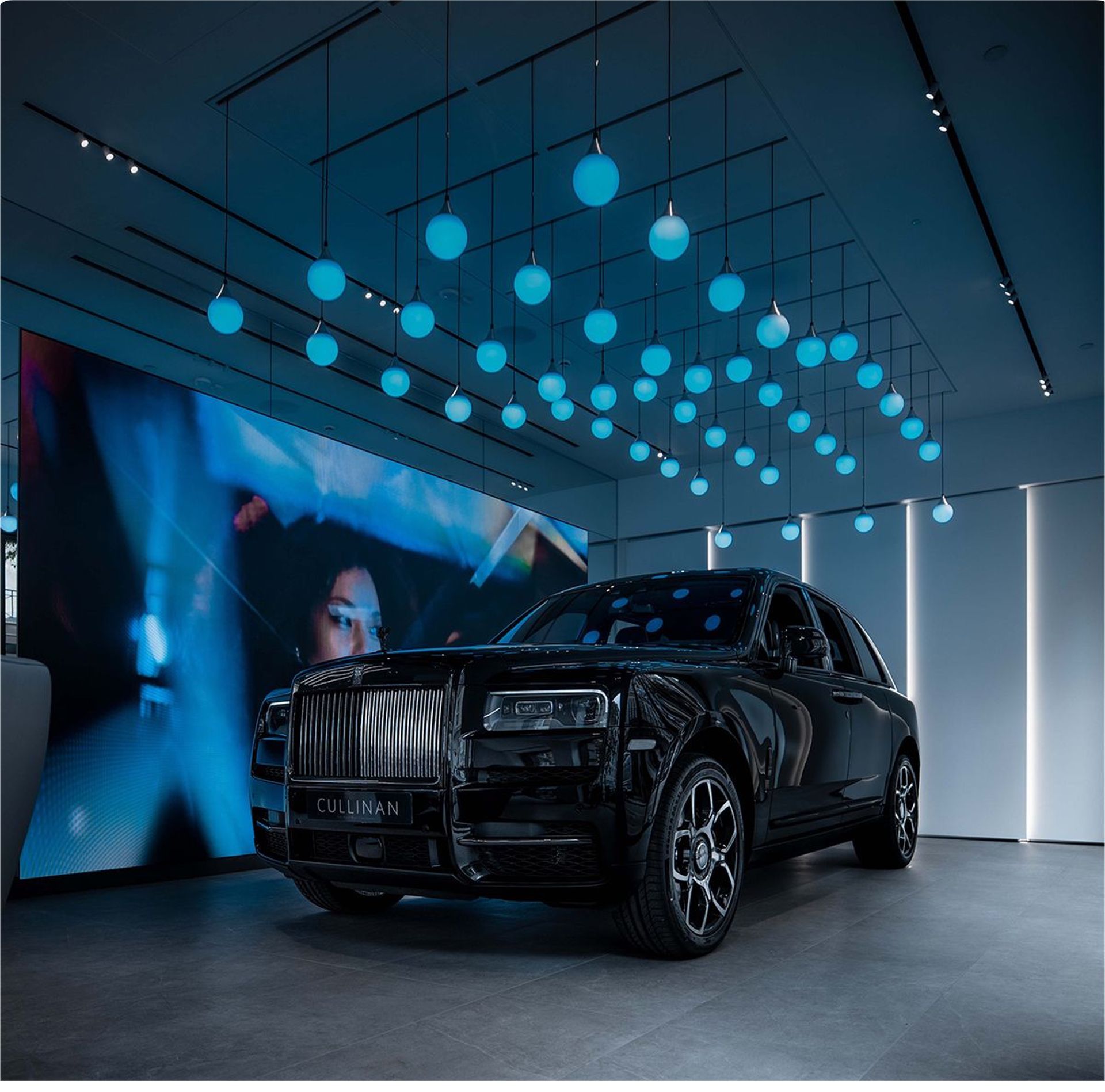
For luxury car buyers, the showroom must be an elevated environment, a space that befits a premium lifestyle. The showroom’s role as an extension of the brand is one of the reasons why luxury automotive companies have started to move away from franchise dealerships where they have more limited control. Full brand immersion is the expectation, with brands like Lotus creating dedicated brand centres that invite customers to explore the past, present, and future of the company.
Every aspect of the showroom must be carefully curated, from the sound and lighting to the content, LED displays, and product placement. Customer service is also integral; it wouldn’t be surprising if automotive brands followed the lead of luxury hotel chains like the Ritz-Carlton in allocating each member of staff a budget to ensure they can go above and beyond for the customer.
Cross-channel coordination
With 92% of car purchases beginning with research online[3], digital and physical showrooms need to be fully integrated. Data is the key – it makes everything else work. When it comes to integrating technology into the showroom, luxury automotive brands should aim for digital elegance rather than invasive executions. To achieve sensory engagement without risking overload, you need a light touch. Whether you’re curating a soundscape or installing touch feedback on a screen, it’s the subtle details that make all the difference.
Once a purchase is made in the showroom, the work isn’t over. To inspire loyalty and potential repeat custom, luxury automotive brands need to invest in community building. A part of buying into the luxury car owner lifestyle, becoming part of an exclusive community offers a sense of belonging that is almost tribal. It ensures those who value status feel like a member of the elite, unites performance enthusiasts with their fellow petrolheads, and provides prestige to those who buy into the brand’s heritage appeal. Community building activities could range from track days and special events to contributing your car’s design to a piece of digital artwork that continues the brand’s legacy.
A memory made to last
The handover is the final step and arguably the most important. While brands can build anticipation during the manufacturing process, the delivery experience is their opportunity to go all out. It should be more than simply handing over the keys and cracking open a bottle of Champagne. Brands can combine digital and physical experiences to craft a moment that will not only live on in the buyers’ memory but also resonate on social media, where the next generation of customers awaits.
If this deep dive into the world of luxury automotive proves anything, it’s that the industry has a multitude of customer experience moments to consider and high expectations to meet. Achieving perfection across every touchpoint, from showroom experience and customer service to digital content and the all-important handover moment, is no mean feat.
But the good news is that these brands don’t need to go it alone. Working with an external partner like Mood can not only provide a fresh perspective but also means these brands have access to expertise gained across other industries that they can implement in their own buying journeys. That way, these brands can start to experiment with new ways of engaging with their customer base – both existing and potential buyers – without losing sight of the rich heritage and brand equity that set them apart from the crowd.
Our message to the industry: you stay in the driving seat, but we can handle the navigation.
[3] https://www.thinkwithgoogle.com/intl/en-emea/consumer-insights/consumer-trends/automotive-digital-transformation/