



The impact of digital content and personalised experiences
The impact of digital content and personalised experiences
Personalisation is expected to transform physical retail in the coming years, but is anyone doing it right
When it comes to adapting digital content to serve a specific audience, there’s a wide gap between ambition and expectation – and customers are more than aware of this discrepancy. In fact, only 23% of shoppers think that retailers are doing a good job when it comes to personalisation.[1]
But how can brands bridge the gap?
It all starts with understanding customer experience. Content for content’s sake isn’t just a waste of budget, but it also runs the risk of alienating loyal customers.
If this sounds familiar, you’re not alone. Several luxury brands are hampered in their efforts to implement digital content effectively; some haven’t built sufficient knowledge of the customer in-store experience, some don’t have buy-in from stakeholders, and some are restricted by budget.
Any luxury brand considering using digital content in their retail stores – and potentially personalising that content – should start with four key questions:
1. What is the purpose of this content?
2. In what context will customers experience this content?
3. How will this content impact the customer journey?
4. Does this content complement the store environment?
If you don’t have an answer to each of these questions, you’re probably not ready to maximise the opportunity digital content offers.
And it is a considerable opportunity; retailers who can effectively leverage personalised digital content in-store are 48% more likely to exceed their revenue goals.
So, how can you use digital content effectively?

Finding the Perfect Balance
Imagination, curation, and connection. A simple formula but one that can be difficult to implement in practice.
Balance is also an important factor. Brands often find it difficult to strike the perfect balance between creating content that becomes a bland digital wallpaper and displays that shout at the customer – an unwelcome assault on the senses.
Barry McPhillips, Head of Creative at Mood Media, said: “The most powerful content makes people feel before they do. That’s why it’s essential to curate your content with the overall intention to make a connection with your customer. Well-thought-out content that serves a purpose will always be more effective than content created because it’s something your store ‘should’ have in place. It’s something of a cliche, but the old adage remains true: less is more.”
Tell the Story
Premium athletics brand Nike understands that creating a connection with customers is integral to effective digital content.
Nike is known as a disruptive and bold brand – and its use of digital content lives up to this reputation. Its flagship store on Oxford Street in London sees content as providing a sense of theatre to the store.
After unveiling a product range equipped with thermal technology, Nike installed a thermal camera that picked up visitors as they moved around the store. Not only did this ensure every customer had a unique experience while in-store but it cleverly told the story of the product (as well as offering a touch of magic!)
Spotlight on: Future Stores
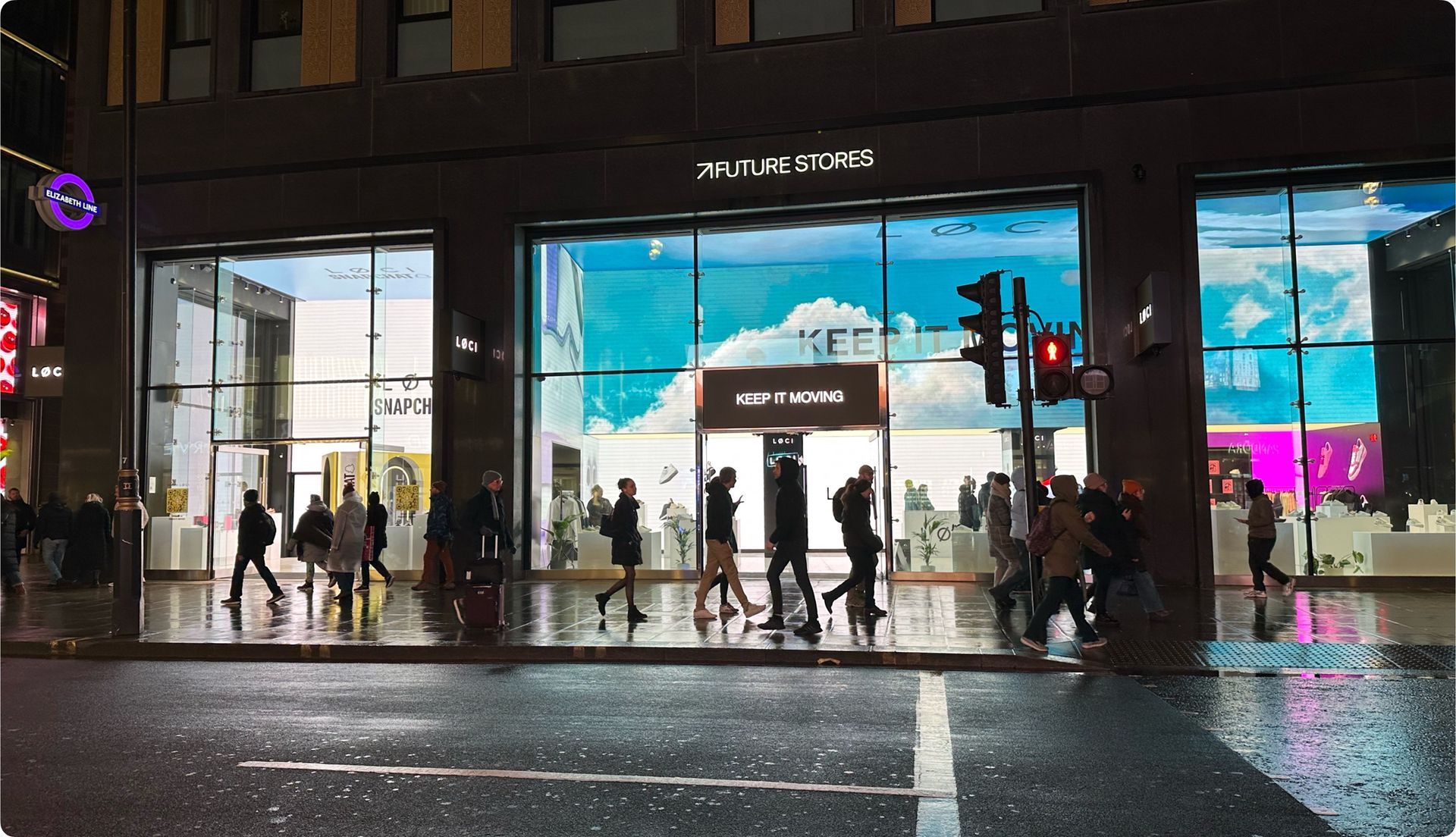
When it comes to digital content, Future Stores has taken things to the next level. In its immersive Oxford Street space, the store itself has become the media. Due to the scale of the displays, their placement, and the content each brand chooses to showcase, visitors are guaranteed to feel awe-struck and inspired by the in-store experience.
Functionality First
Content doesn’t always have to be inspiring or emotive to be effective; functional content has an important role to play in-store.
The best pieces will support customers and work intuitively, effectively deploying information architecture - layouts and frameworks – that inspire action. Think of an interactive display providing savoir-faire insights in a heritage boutique or the self-serve customisation functionality offered at Ferrari.
Unlocking the Potential of Personalisation
While digital marketers can benefit from cookies that track their customers’ movements across their e-commerce sites, those operating in physical spaces don’t necessarily have the same data to draw on when personalising content.
You could also argue that the level of personalisation we’re comfortable with online – receiving a marketing email addressing us by name for example – would feel like an overstep if replicated in-store.
Personalisation isn’t straightforward. That’s why only 15% of retailers have fully implemented personalisation into their stores. It relies on brands overcoming the challenge of data acquisition and management.
The most sophisticated personalisation comes with intelligence-based data. Loyalty programmes or established sales associate relationships that track customers’ purchase history can provide data points that brands can use to identify whether they have a high probability to buy any given product. But this level of complexity can only be achieved with dedicated investment.
If you’re just starting to experiment with personalisation, look at appealing to groups rather than individuals, for example, creating a dynamic store environment with content that reacts to the time of day, day of the week, or weather forecast.
Spotlight on: Bentley
With a once in a lifetime purchase, a personalised service is essential. Bentley understands this better than anyone else and creates a bespoke experience for their valued customers. Each buyer is invited to visit the Bentley factory in Crewe when they can see their vehicle being created. And that’s not all; they’ll also receive a video thank you message from the CEO. These thoughtful touches ensure that a Bentley buyer is rewarded for their loyalty and feels genuinely appreciated.
The Impact of AI
The full capabilities of artificial intelligence are yet to be realised, but any potential benefits come with risks.
Generative AI is all about input. If you don’t have an in-depth understanding of what you want your digital content to do and why, then you could be feeding AI incomplete or even incorrect information. The resulting misinformation can lead to investment in more content, but not the content that has real impact.
That being said, once you’ve found the formula for the content that works, AI can get to work. It’s completely plausible that AI could use your data and content frameworks to analyse a potential piece of content and accurately predict its future success before it’s ever briefed into your creative teams.
The ROI of Creativity
No piece of digital content can be deemed successful without the data to back it up. In fact, brands will only invest in the quantities required to make content effective if creatives can demonstrate its value.
Useful metrics can include:
· Footfall
· Dwell time
· Rate of Interactivity
· Sentiment
· Revenue
The MOOD Mission
At Mood Media, we’re committed to helping clients climb the content mountain with a blend of creativity, data, and technology. In fact, we’re so confident about the importance of digital content that we believe it’ll be considered a hygiene factor for brands in the future. And while our suite of technology is exceptional, Mood Media will always be content first, technology second. The technology is employed to fulfil a vision and measure its impact – the true secret to long-term success.