
How data analytics is measuring the impact of experiential retail
Experiential retail offers a world of possibilities for both luxury brands and their customers. It also requires substantial investment.
Any investment in your physical retail spaces can only justified if you can evidence its impact – and the best evidence comes from data.
That doesn’t mean that every dollar spent on digital displays, custom audio, and interactive features must be replicated in sales. Return on investment is important but tracking and analyzing the right metrics can prove that a certain piece of content improves dwell time, a specific fragrance entices consumers towards a feature display, or interactive customization screens increase customer satisfaction.
That’s why data analytics plays an essential role in the experiential retail landscape.
Why does data matter?
In eCommerce, data drives almost every decision. It is used to inform marketing, visual merchandising, user experience, pricing, and more. Each time a customer interacts with a brand’s website, opens their emails, adds an item to their basket, or exits without browsing, the actions they take are monitored and recorded.
It’s not surprising that luxury brands used to that level of granularity in the online realm would want to see this replicated in-store.
Gut feelings, casual observations, and anecdotal opinions aren’t good enough anymore. And they certainly won’t satisfy your CFO when you ask for investment in experiential retail.
Data can create a compelling business case and helps to bridge the gap between creative content and conversion.

Privacy vs. personalization
While it’s now become commonplace, online data gathering hasn’t escaped controversy, which is one of the reasons why retail data specialists like PFM Intelligent ensure the insights they provide are anonymous.
That’s not to say they can’t paint you a picture of the type of people visiting your store. To accurately track and analyze footfall, the company uses a light-emitting radar, which highlights visitors and store staff as they travel around the store.
Each individual is represented by a colorful figure – similar to a thermal heat map – but personally identifiable details like their facial features aren’t visible. PFM also can’t listen in to conversations or find out things like the customer’s name.
So, what can they see?
You might struggle to believe it, but the anonymous figure can be used (with 90% accuracy) to determine the customer’s:
- Height
- Gender
- Age Group
In the future, they may even be able to share data on each customer’s emotional state.
This can complement the pen portraits and demographic data that most brands will use to target their marketing and tailor their product line.
While identifying who visits your store is important, when it comes to analyzing the impact of experiential retail, it’s what those customers do while they’re visiting that really matters.
From the street…
It all starts outside your store.
A truly multifaceted approach to analyzing footfall will start by monitoring street traffic to understand the vibrancy of a given location while simultaneously using a combination of mobile phone and Census data to provide insights into the demographics of those passers-by.
These insights can help you decide whether this is the right location for your brand or, if it’s an existing store, whether it’s the right space to experiment with experiential.
…to inside the store
Once someone crosses the threshold, PFM’s discreet technology will kick in. Each figure that enters will immediately be flagged as either a customer or a member of staff.
These figures can then be followed as they journey around the store.
Observing their actions can show:
- Where they choose to dwell
- When they engage with a piece of content
- When they interact with a staff member
- Which products they prefer
These actions all form part of a path that hopefully leads to a purchase, but if it doesn’t, that information is still just as valuable.
Gather enough data and start observing the patterns it shows and you’ll soon spot the steps that signify intent to buy and are more likely to convert.
And one of the best things about this type of data gathering is that it’s always on. 24/7.
Improving sales and optimizing operations
Data analytics isn’t only useful for helping you streamline your store layout and understand which experiential solutions (displays, audio, scent, and more) are having the most impact, but it can also help you optimize your everyday operations.
Even the most captivating and immersive experience can be undermined by inadequate staffing levels or complicated purchase processes.
By analyzing how, when, and where customers who convert tend to interact with sales associates, brands can find the golden ratio of employees to customers.
The 24/7 nature of this technology also means managers can quickly identify when the store is busy and when quiet times strike. They have the hard numbers they need to create predictive rotas, floorplans, and break schedules.
Spotlight on: Future Stores
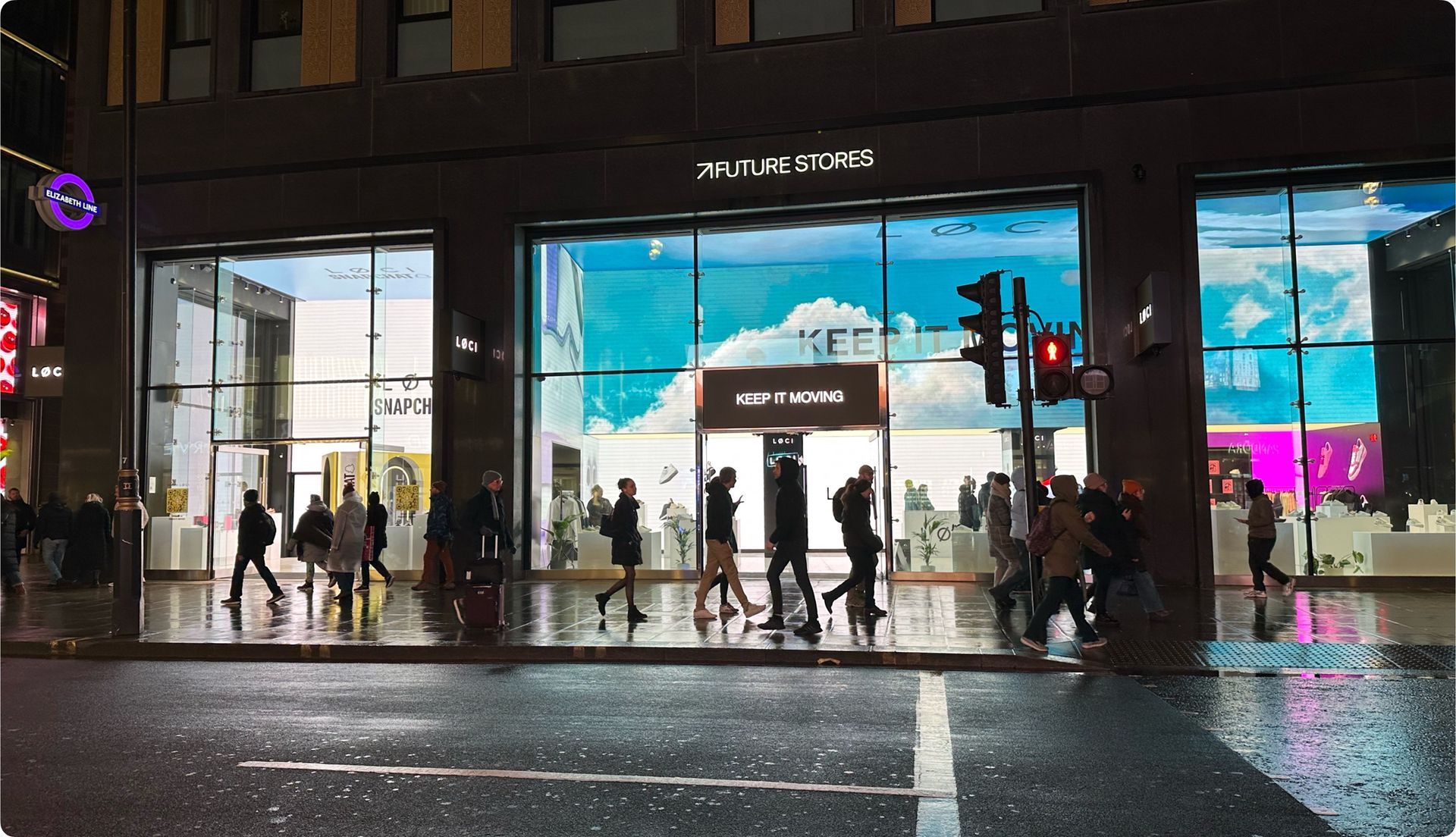
Set on London’s most iconic shopping street, Future Stores on Oxford Street has tens of thousands of people passing by each day. PFM Intelligence can monitor this footfall and identify who crosses the threshold and what it was that caught their eye, whether it’s a bestselling product on display or an incredible piece of content on the big screen.
Despite the spectacular LED displays that span the walls and ceiling of this innovative space, PFM was able to install its monitoring devices in three corners of the store and above each entrance.
As different companies take over Future Stores and make the space their own, PFM can help each brand – and the retail sector at large – understand the way each visitor experiences and interacts with the content on display. Are they drawn to the visual spectacle? Are the interactive tools capturing their attention? Or is it the product that has them stopping and staring? The answers are just a few clicks away.
How to make the most of data analytics in your store
While data analytics has been widely adopted by the retail industry, to obtain the most insightful information its implementation still requires careful consideration.
As Mark King, Market Development Director at PFM Intelligence, explains, “The first question brands need to ask themselves is why do we need this data? While conversion might be the ultimate goal, in an experiential space, there are many other metrics to consider beside sales. It’s essential that brands take time to identify what success looks like, why it matters, and what ROI really means.”
What’s next? The future of retail analytics
Data analytics isn’t going anywhere, but it’s likely to evolve alongside the luxury retail sector in the years to come.
- Click and collect
As the boundaries between online and real-world retail continue to blur, click and collect will become an important component of bricks-and-mortar stores. These customers will impact staffing levels and expect a different experience to those browsing and shopping in-store. Data analytics can help to plot bespoke paths through the store for these customers, creating a journey centered on convenience.
- A holistic view
While luxury retailers have always understood that the in-store experience is about far more than the transaction, these softer metrics can now feed into the foundation of how a space is curated. Stats relating to brand loyalty and sentiment will continue to be just as valuable as final sales figures.
- Personalized experiences
Data can help stores provide a personalized experience based on time of day, the weather, or the demographic of the footfall outside. Using historic data to make predictions, stores can understand how a customer who visits on a sunny day is likely to act vs. one who takes shelter in a downpour and tailor the in-store experience in response.
Keen to learn how Mood Media can help you effectively use data analytics in experiential retail? Get in touch with our team today.